
Getting to Know Holy Basil
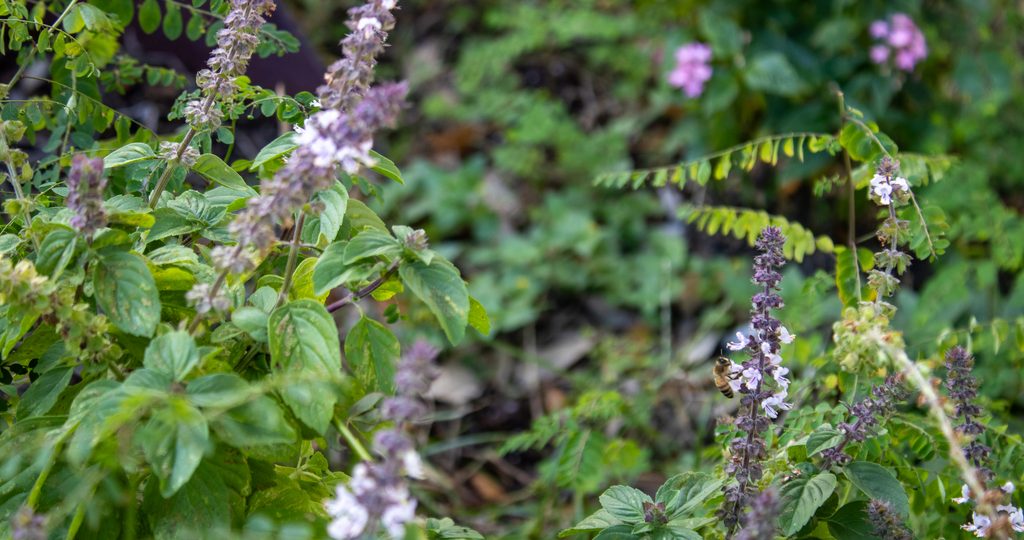
Holy Basil: That’s a Lot of Flowers! Why Bees Love This Herb
There is something special about getting to know a plant beyond simply recognizing its name. We might grow it in a garden, brush our fingers against its leaves, or notice its scent when we walk past it. The more we learn about the plants around us, the more interesting they become. Holy basil is one of those plants worth getting to know, especially if you enjoy gardening and want to attract more bees to your yard.
I’ve got holy basil growing in my garden, and it is prolific! It happily sends out new shoots and grows so enthusiastically that it needs regular pruning to keep it from spreading too far. That’s actually one of the things I love about it. It handles the hot weather here in Texas very well, and I love having a plant that keeps producing flowers for as much of the year as possible.
A Little Plant with a Big Personality
Holy basil (Ocimum tenuiflorum), also known as tulsi, is an aromatic herb related to the culinary basil we might grow in our gardens or use in the kitchen. Its leaves are usually green, sometimes tinged with purple, and release a distinctive, spicy fragrance when brushed or crushed.
Native to the Indian subcontinent, holy basil grows well in warm, sunny conditions. It can thrive in garden beds or containers, making it a lovely option for gardeners with plenty of space or just a small patio. Give it sunshine, warmth, and well-drained soil, and it can reward you with leafy growth and delicate flower spikes.
My favorite thing about this herb is that we aren’t the only ones who appreciate it. A garden is never just about the plants we choose to grow. It’s also about the little visitors that find their way there.
Holy Basil Flowers: A Favorite Stop for Bees
When holy basil flowers, it becomes much more than a fragrant herb. Its small blossoms offer nectar and pollen to visiting insects, and bees are especially fond of them. Honeybees and various wild bee species may visit the flowers, moving from one tiny bloom to the next as they forage.
My mom first suggested holy basil for my garden because we had bees in our backyard. I wanted to make sure I planted flowers that would bloom quickly and continue producing for a while. She has holy basil growing in her garden, too, and it was a favorite of the bees around her place!
Now, well into fall, I’m still seeing bees visit my holy basil flowers. Unfortunately, my own bees left. I know why, and I’m still working on fixing the problem, so for now, I’m simply enjoying the visiting bees.
The flower spikes produce many small blossoms over time, giving bees repeated opportunities to visit while the plant is blooming. There is something delightful about watching bees work their way through a flowering herb. They move with purpose, visiting one blossom and then another, often seeming completely unconcerned with anything happening around them.
If you take a few minutes to sit nearby, you may notice how much activity is happening in a space that seemed quiet at first. A plant that looks like a simple cluster of flowers to us can become a busy feeding spot for pollinators.
Growing Holy Basil in a Pollinator-Friendly Garden
Holy basil can be a useful addition to a pollinator-friendly garden, especially in warm climates where it can grow vigorously. As with any plant, the number of bees it attracts depends on the weather, the flowers available nearby, and the local pollinator population. Pairing holy basil with other flowering plants can help provide food throughout more of the growing season.
A garden doesn’t have to be large to make a difference. A few pots on a sunny patio can provide flowers for visiting bees. Add a variety of flowering herbs and native plants, and you can create a space that offers food and shelter to more of the small creatures living around you.
It’s easy to think of gardening as something we do for ourselves. We plant flowers because we like their colors, grow herbs because we enjoy their fragrance, and tend vegetables because we want something fresh to eat. But when we choose plants that support pollinators, our gardens become part of something bigger.
Taking Time to Notice the Little Things
One of the things I enjoy about learning more about nature is how easily one discovery leads to another. A plant catches our attention, and soon we’re learning about its growing habits, the insects that visit its flowers, and the conditions it needs to thrive.
We don’t have to travel to a remote forest or spend hours hiking to experience that kind of discovery. Sometimes it begins with a plant growing in a pot, a bee landing on a flower, or a patch of greenery we pass every day without a second glance.
I have a small garden in my front yard. I’m still learning which plants do well, how much sun different parts of my yard receive, and which plants I love growing. I’ve begun to really enjoy my garden and all the little visitors that enjoy it, too.
Holy basil is a reminder that even a single herb can bring more life into a garden. Its leaves offer fragrance, its flowers provide food for visiting bees, and its presence gives us one more reason to stop and pay attention.
The next time you see a bee visiting a flower, take a moment to watch. Notice how it moves and how many blossoms it visits. There’s a whole little world unfolding right in front of you, and sometimes all it takes to discover it is a few quiet minutes.

Blog
This section provides an overview of the blog, showcasing a variety of articles, insights, and resources to inform and inspire readers.
-

“Holy Basil Flowers: Why Bees Love This Herb.
Holy basil is a prolific, heat-loving herb that keeps my Texas garden full of flowers…

Leave a Reply